About Us
Built by clinicians, for the profession. We exist to strengthen mental health training, expand access to care, and advance clinical excellence.
Structure + Application
The Green Book™ is designed as a progressive learning system:
Foundation — The Edge Mapping Method™
The Edge Mapping Method™ is our proprietary clinical diagnostic framework — and the centerpiece of every Green Book™ product. Start with the two must-haves: Toolkit (Vol. I) delivers Edge Mapping, exam strategy, and clinical reasoning; Study Guide (Vol. II) reinforces mastery through 300 practice questions and readiness confirmation.
- Edge Mapping Method™ — proprietary diagnostic framework
- T.F.S.R. — Onset & Symptomology screening
- DIGFAST — Manic episode differentiation
- SIGECAPS — Major Depressive screening
- R.O.S.E. — Function Testing across life domains
- Psychosis screening & differential mapping
- Green Book Thesaurus + clinical reasoning under exam conditions
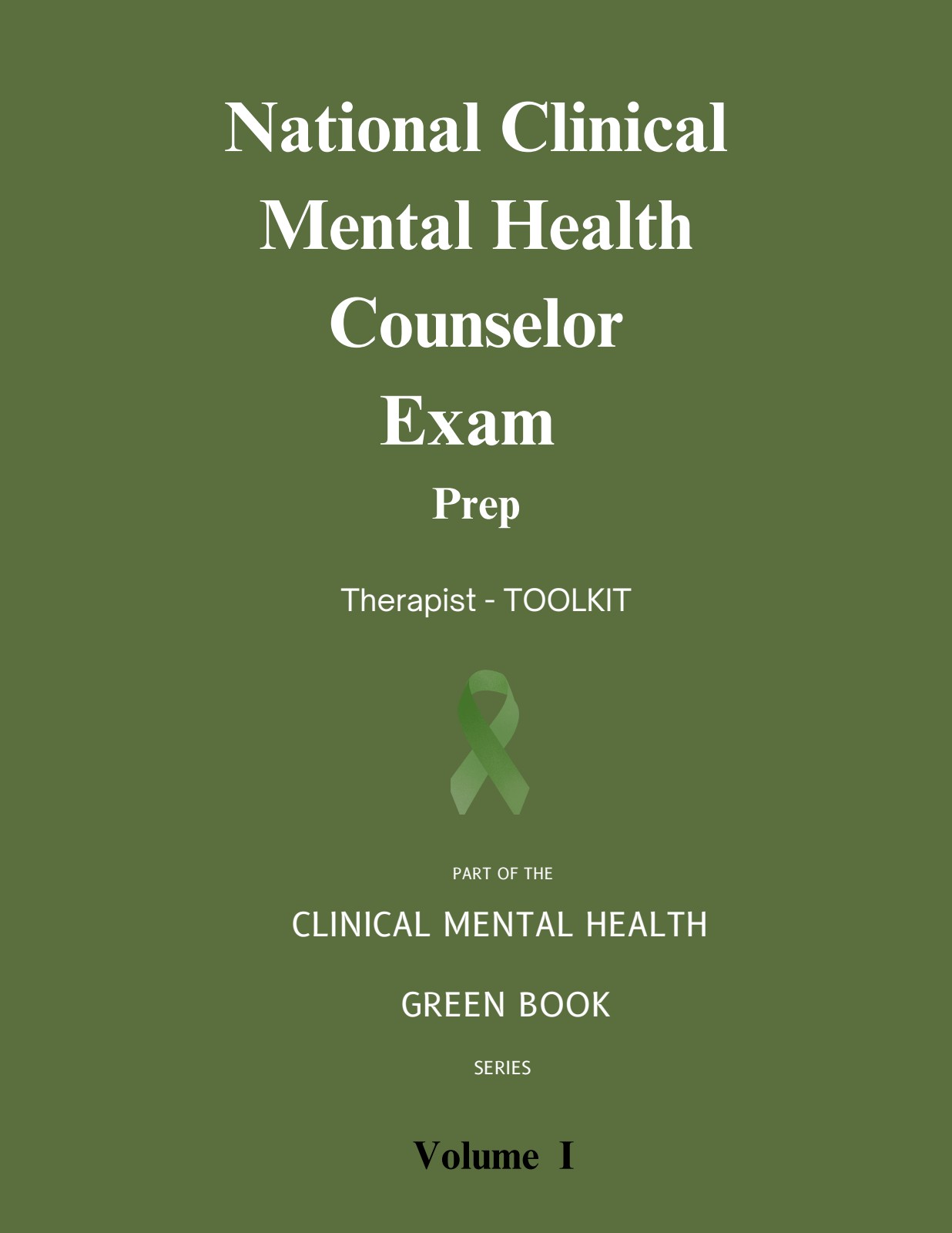 Vol. I — Toolkit
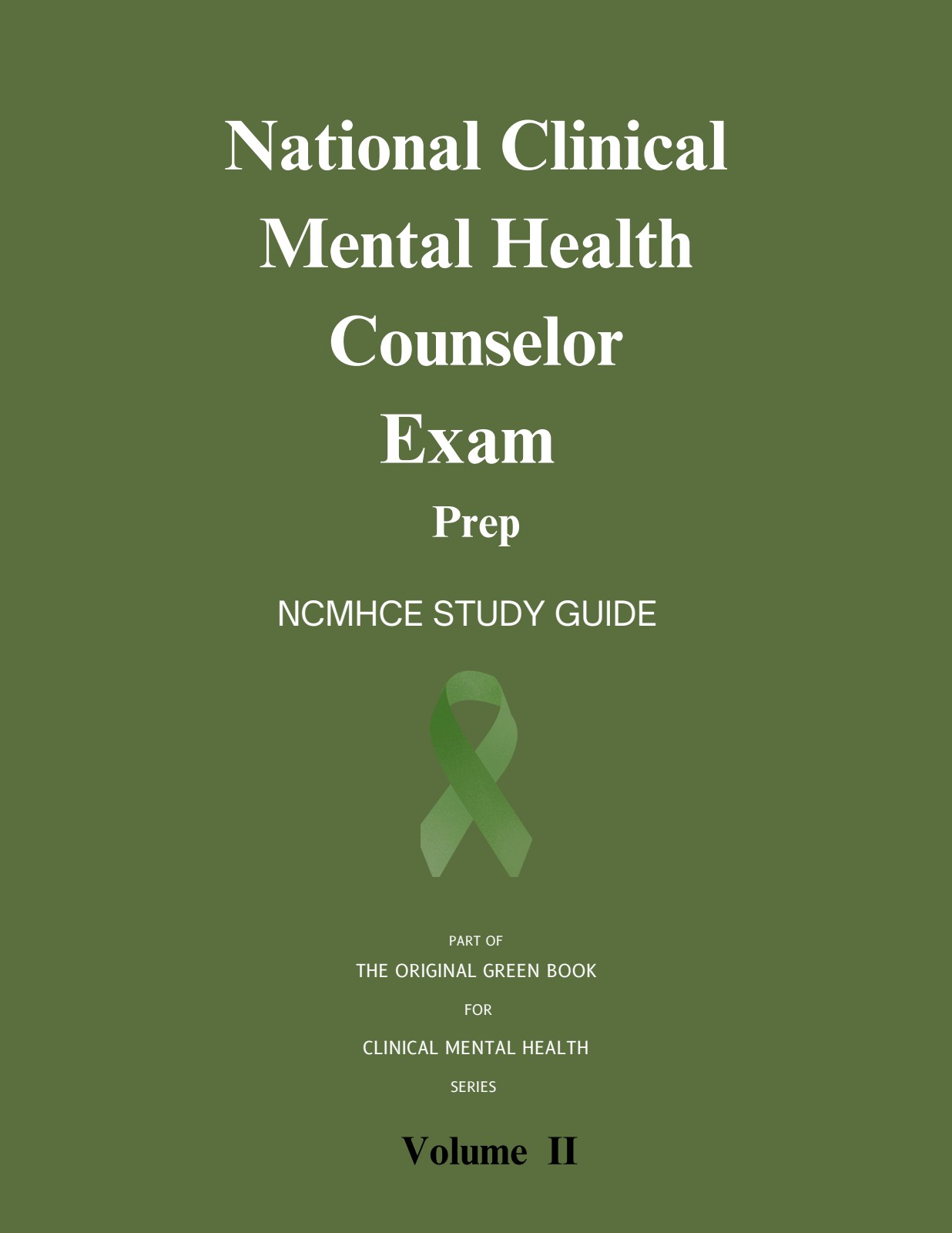 Vol. II — Study Guide
Edge Map™ and Edge Mapping Method™ are trademarks of Clinical Mental Health Green Book, LLC.
Specialty Volumes — Deep Clinical Mastery
Strengthen specific clinical areas with specialty volumes (III–IX). Choose volumes based on where you need more understanding.
- Mood Disorders (Vol. III)
- Psychotic Disorders (Vol. IV)
- Personality Disorders (Vol. V)
- And more (Vols. VI–IX)
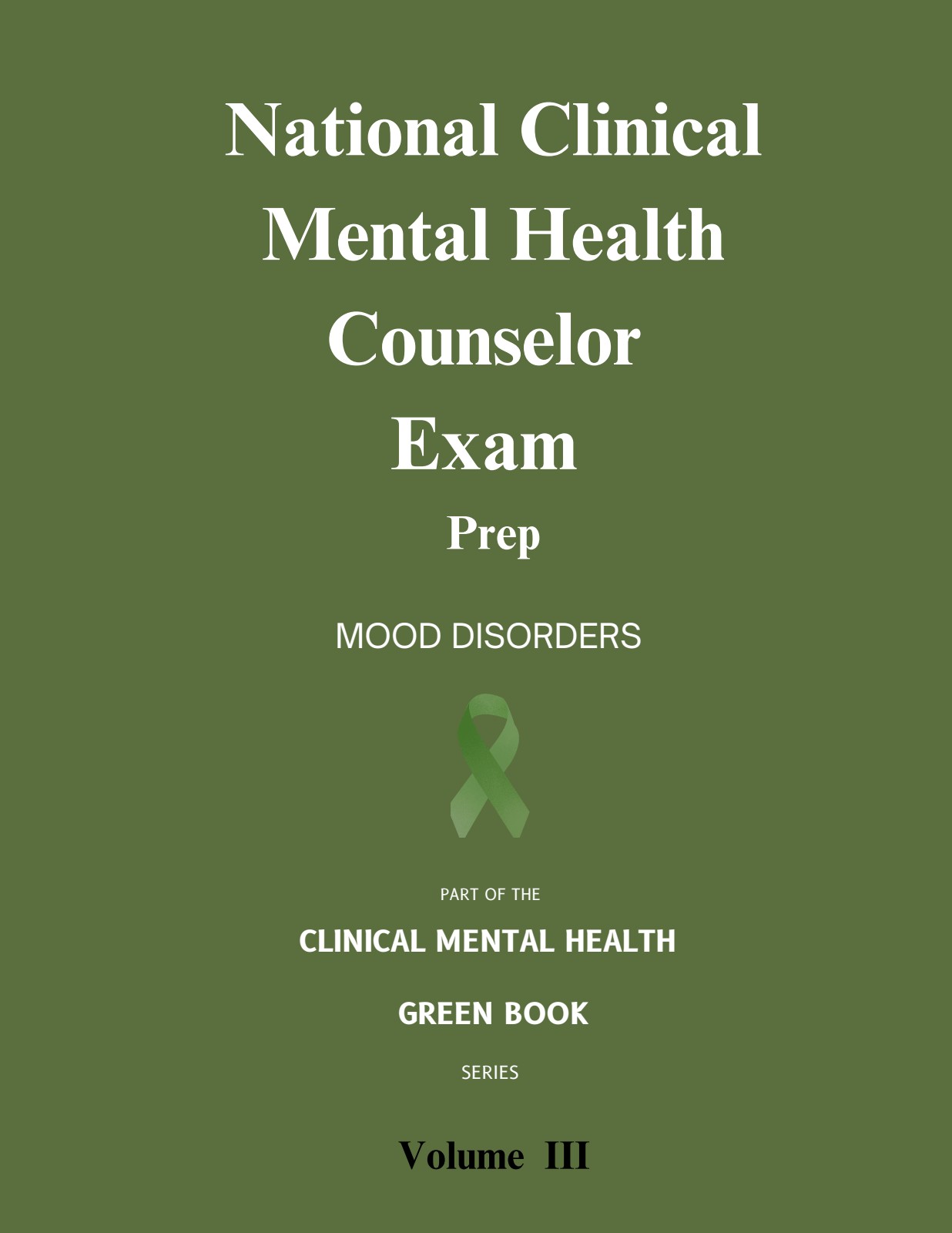 Vol. III
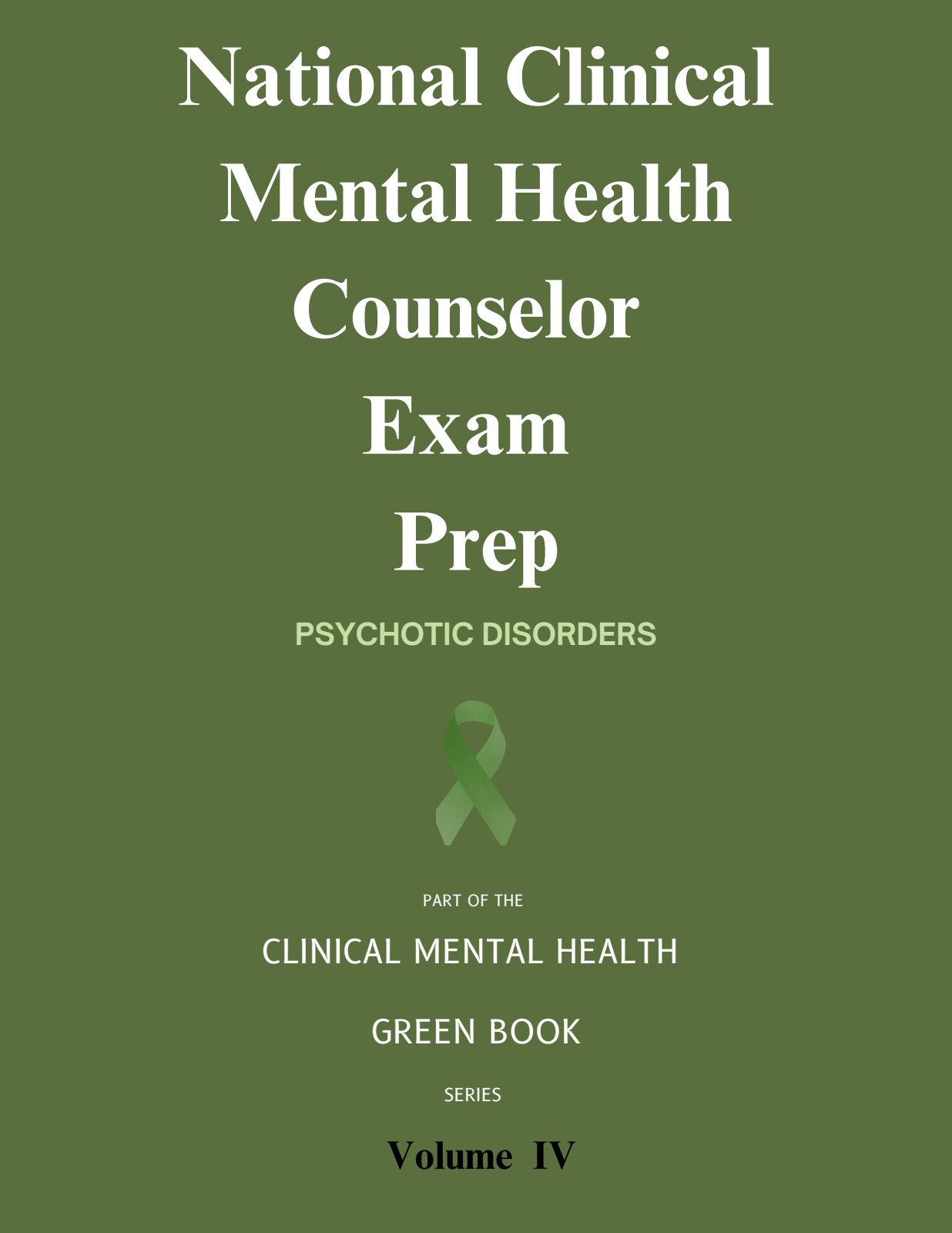 Vol. IV
 Vol. V
 Vol. VI
 Vol. VII
 Vol. VIII
Treatment Planning — Theoretical Orientation
Learn how to select effective interventions through Theoretical Orientation, connecting diagnosis to appropriate treatment strategies.
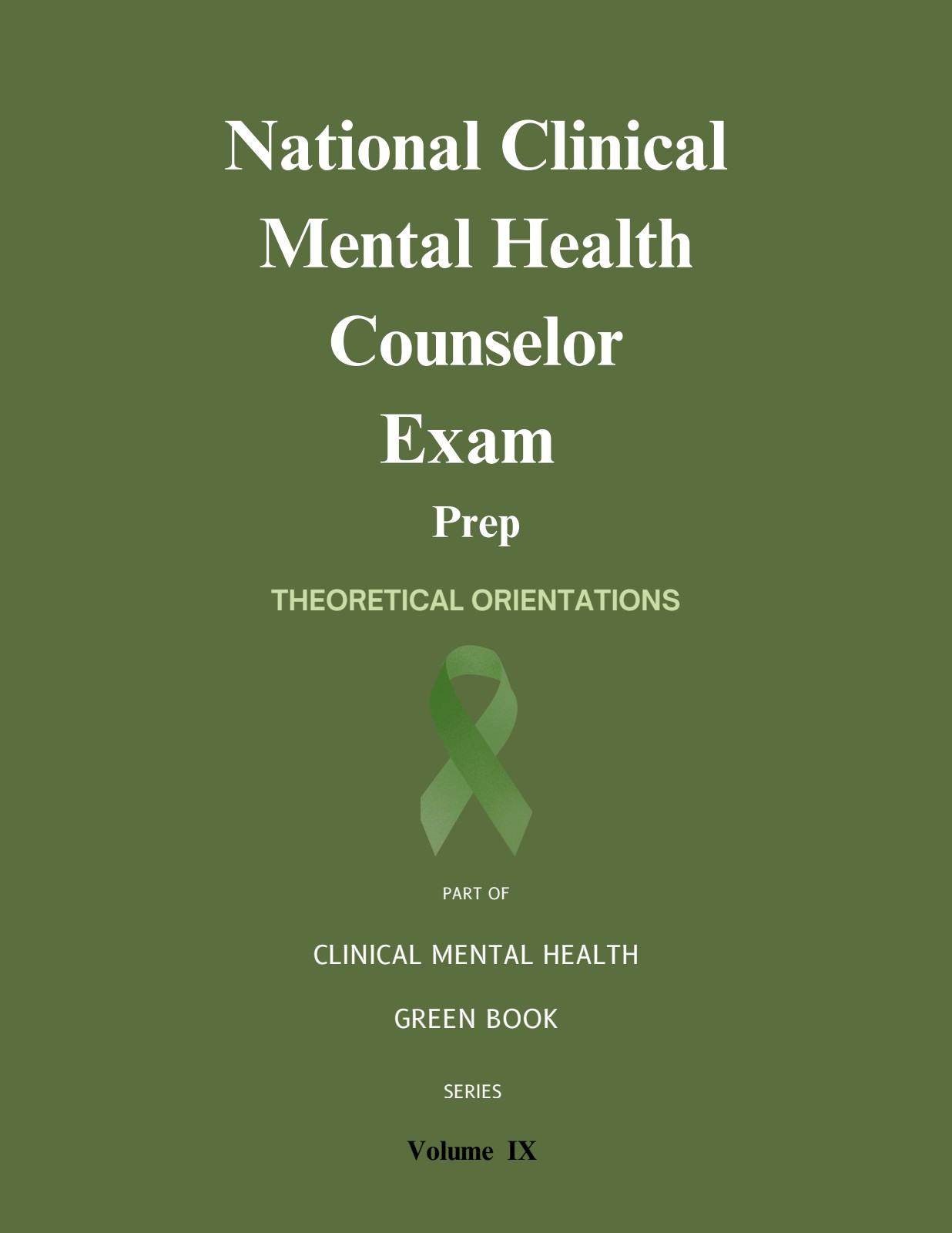 Vol. IX — Theoretical Orientations
Exam Readiness — Included in Must-Have Vol. II
Volume II (NCMHCE Study Guide) provides 300 practice questions with 9 differentiating vignettes for final exam preparation in the last 30–45 days.
- Clinical vignettes mirroring real exam scenarios
- Multicultural considerations reflecting real client populations
- DSM-5-TR grounded diagnostic frameworks
- Ethical dilemmas and risk management scenarios
- Detailed rationales explaining why decisions are correct
Vol. II — Study GuideTake the Green Book™ With You
A one-page promotional handout introducing The Clinical Mental Health Green Book, LLC™ — our Signature Methodology, both volumes, and how clinicians and students can begin using the Edge Mapping Method™ today. Scan the QR code to explore the full ecosystem.

How to use this QR: Open your phone's camera app (or any QR reader), point it at the code, and tap the link that appears to visit our site instantly.
Download QR Code (PNG)Download the Handout (PDF)
The Edge Mapping Method™ & the 9 Differentiating Vignettes
Two interlocking systems sit at the heart of the Green Book™. The Edge Mapping Method™ (Toolkit, Vol. I) trains how to think diagnostically. The 9 Differentiating Vignettes (Study Guide, Vol. II) prove you can apply that thinking under real exam and clinical pressure.
The Edge Mapping Method™
Edge Mapping™ is a structured visual reasoning framework that teaches clinicians to think along the diagnostic edges — the narrow zones where two or more disorders overlap, mimic, or co-occur. Rather than memorizing isolated criteria, students learn to map the boundary conditions that separate look-alike presentations (e.g., Bipolar II vs. Borderline Personality, PTSD vs. Psychosis, ADHD vs. Anxiety, Major Depression vs. Adjustment Disorder).
How It Works
Each presentation is mapped onto a 5-zone diagnostic grid that visualizes overlap, exclusion criteria, course/onset (T.F.S.R.), and functional impact (R.O.S.E.).
Clinical Payoff
Faster, defensible diagnoses; cleaner treatment planning; reduced bias; and a repeatable thinking pattern that transfers from study desk to therapy room.
Integrated tools: Edge Mapping™ pairs with SIGECAPS, DIGFAST, R.O.S.E. Function Testing, T.F.S.R. Onset/Symptomology, and the Green Book Thesaurus — giving clinicians a complete cognitive toolkit for navigating diagnostic ambiguity.
300 Questions, Two Integrated Parts
Volume II is engineered around a 300-question preparation system that mirrors the structure, pacing, and clinical reasoning demands of the actual NCMHCE. Every item includes a detailed explanation tied to DSM-5-TR criteria and Green Book™ methodology — so candidates don't just answer questions, they internalize the reasoning behind them.
30 questions per NCMHCE content section (×7 sections), each with a detailed rationale that reinforces clinical decision-making.
Builds domain-by-domain mastery across the full NCMHCE blueprint — assessment, diagnosis, treatment planning, and beyond.
10 questions for each of the 9 Differentiating Vignettes — simulating the case-based reasoning the NCMHCE uses to separate competent from non-competent clinicians.
Trains the candidate to navigate evolving clinical scenarios under exam-style pressure.
Diagnostic Differentiation
Distinguishing overlapping disorders using DSM-5-TR criteria.
Symptom Course & Onset
Applying T.F.S.R. (Timing, Frequency, Severity, Response) reasoning.
Treatment Planning
Selecting evidence-based interventions tied to diagnosis.
Multicultural Competency
Integrating cultural, spiritual, and identity factors.
How 300 questions prepare you for the exam: Part I builds breadth — confirming you've mastered every NCMHCE content section. Part II builds depth — proving you can apply that knowledge inside the case-based vignette format the exam actually uses. Together, they replicate the full cognitive load of test day, close diagnostic blind spots, and convert studied content into exam-ready clinical reasoning.
Edge Mapping™ teaches the method. The 9 Vignettes prove the mastery. Together, they form the diagnostic backbone of the Green Book™.
More Than a Study Resource — A Professional Movement
The Green Book™ is more than a product — it is part of a broader mission to:
"When we build stronger clinicians, we build stronger communities."
Meet the Co-Founders
Dr. Itzel Harriott
PharmD, PhD (Psychology), MS, MBA, RMHCI
Co-Founder | Chief Executive Officer | Clinical Educator & Strategic Outreach
Dr. Itzel Harriott is a Registered Mental Health Counselor Intern, Clinical Educator, and Chief Executive Officer of the Clinical Mental Health Green Book, LLC. She holds a Doctor of Pharmacy (PharmD), a PhD in Psychology, a Master of Science in Pastoral Care Counseling, and an MBA — offering a powerful interdisciplinary perspective that integrates clinical science, mental health practice, business acumen, and educational leadership.
Dr. Harriott served as a Naval Officer (LT/O3) in the U.S. Navy Medical Service Corps as a Division Officer and Clinical Pharmacist from 1992 to 2001. She was nominated by the U.S. Navy as the Attending Physician to Congress and is one of the most decorated professionals in the mental health field today.
As CEO, Dr. Harriott serves as the primary representative of the Green Book initiative, leading engagement with universities, counseling programs, community organizations, and public leaders. Her work focuses on expanding access to high-quality clinical training, strengthening academic partnerships, and advancing mental health education at both institutional and community levels.
In addition to her leadership role, Dr. Harriott develops, co-develops and delivers training programs, workshops, and speaking engagements aligned with CACREP standards and the evolving needs of the counseling profession.
She is dedicated to preparing the next generation of counselors to serve with knowledge, integrity, and clinical excellence.
Jerome R. McDuffie
LMHC, MA
Co-Founder | Executive Director | Clinical Architect
Jerome R. McDuffie is a Licensed Mental Health Counselor and Co-Founder of the Clinical Mental Health Green Book, LLC. He holds an A.A.S. in Accounting; a B.A. in Criminal Justice Management; Master of Arts in Clinical Mental Health Counseling; and a Master of Arts in Addictions Counseling, bringing a comprehensive foundation in both clinical practice and substance use treatment.
As Executive Director, Jerome serves as the primary architect behind the Green Book's structured approach to clinical reasoning, exam preparation, and counselor development. He leads the design and development of all Green Book content, translating complex clinical concepts into clear, practical systems that strengthen diagnostic accuracy, treatment planning, and clinical decision-making.
His work emphasizes real-world application of DSM-5-TR criteria and prepares students and interns to think critically under exam conditions and in live clinical environments.
Prior to his work in mental health, Jerome served over 30 years in federal law enforcement as a Special Agent with the U.S. Department of the Treasury, holding positions such as the Special Agent in Charge of the New Orleans field office, and Headquarters Acting Director Narcotics and Counterterrorism. His investigative and analytical expertise now informs his systems-based approach to clinical education and structured problem-solving.
He is committed to strengthening the counseling profession by equipping emerging clinicians with tools that promote competence, confidence, and client safety.
Shared Statement
Together, Jerome R. McDuffie and Dr. Itzel Harriott lead the Clinical Mental Health Green Book, LLC initiative with a shared mission: To strengthen the counseling profession through structured clinical education, accessible training tools, and advocacy that supports both clinicians and the communities they serve.
Ready to Strengthen Your Clinical Practice?
Explore our resources, connect with our team, or support our mission to make mental health training accessible to all.